A part of this viewing list: Criterion Collection Spine #5: François Truffaut’s Les Quatre cents coups
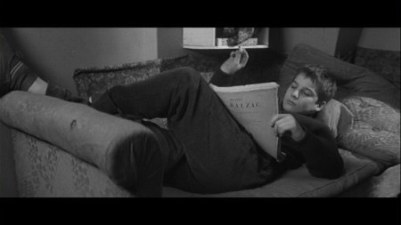
This is only the second time I’ve seen The 400 Blows. It is pretty much considered the ur-film of the French New Wave which means, unfortunately, that its freshness of technique and subject matter are a bit lost by the vast majority of films made in a similar vein since. Despite its now-ubiquity as a film class staple, it remains strong, mainly because of the fascinating character that is Antoine Doinel.
Doinel is often considered to be a stand-in for Truffaut, which for me perfectly exemplifies the only real problem I have with most French New Wave films. It shouldn’t be surprising that the director’s presence is so evident, coming hard on the heels of Truffaut’s own development of auteur theory; but to me the obsession that FNW directors have in making themselves auteurs tends to impede the other facets of the filmmaking, and almost seems masturbatory.
That said, The 400 Blows would not succeed as well as it does without Truffaut’s own personal experience to drive and add nuance to the story. There is no doubt that he knew what he was doing, so steeped in the venerable tradition of Bazin [to whom the film is dedicated] as he is. If anything would make me like film criticism more than film-making, Cahiers du cinéma could do it. But I’m still talking about Truffaut, not the film, thus is the difficulty of dealing with a work that has become more about the man making it than the work itself.
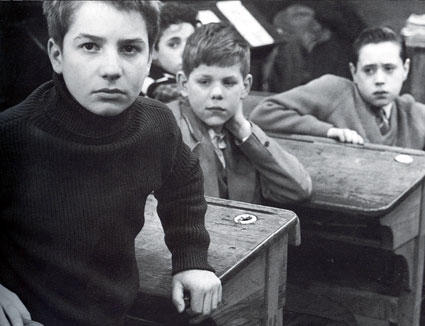
The 400 Blows is mainly a film about adolescence, but it wouldn’t be French without healthy doses of existentialism and anomie as well. That’s what I find most interesting. Antoine is the unwitting existential hero, striving for his autonomy against a society that has no place for him. His very nature belies this quest, because throughout the film he is merely reactionary. [When he reaches the sea and runs out of things to react against he finally catches a glimpse of the horror of true freedom]. It almost seems as if Truffaut is making a correlation between existential autonomy and anomie, and here adolescence enters back into the picture. The teenage years are an extended liminal period culminating [for Antoine] in a choice between exercising his will to power or allowing himself to be crushed into a system that offers all stick and no carrot.
There is a third choice, of course, remaining in adolescence for the rest of your life. We’ll see what happens with the rest of Truffaut’s films about Antoine Doinel. I haven’t seen them, but they are part of the Criterion List.
• Criterion Essay by Annette Insdorf
• Criterion Essay by Kent Jones
• The Criterion Contraption’s review.