A part of this viewing list: Criterion Collection Spine #7: Roy Baker’s A Night to Remember.
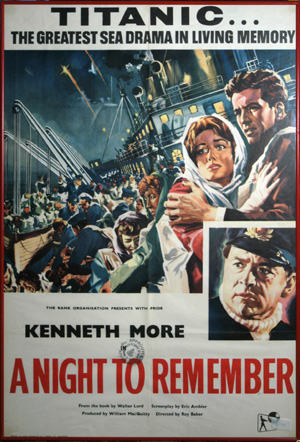 This is a film where I’m going to talk nearly as much about the Criterion DVD as much as the film itself. Or maybe not. But it bears mentioning that the commentary on this release comes from two Titanic experts and discusses the actual events in comparison to the Walter Lord book and the film adaptation of that book. This is the type of high quality and novel film experience that only Criterion could supply. A movie based on a book based on one of the most memorable events of 20th century analyzed by two experts of the actual event.
Dramatic reenactments don’t do a whole lot for me, but A Night to Remember supplies enough snarky social commentary on pre-World Wars Britain that the film only drags slightly. We watch the boat sink in approximate real time, and it torturously takes forever. I mean, we know what happens. The boat sinks, most of the people die. Roy Baker makes the film interesting by using it as hindsight foreshadowing of the end of Britain’s golden age, though none of the Brits seem to realize that this is the case. Class distinctions are still supposedly quite marked in present day Britain, but I find it unlikely that they are even close to being as segregated as they were in 1912. I could be wrong, however, since as a dramatic reenactment it is likely Baker extrapolated the gap. The tragedy is emphasized again and again by the proximity of the Californian and the simple missed communications and brief fits of pique that ultimately result in the deaths of 1500 folks.
Baker paradoxically seems to yearn for the feeling of confidence that suffused the passengers at the start of the voyage and simultaneously shred the arrogance of many of the aristocracy who refuse common sense in favor of their appearance and comfort. The steerage passengers become innocent victims and the survivors unworthy in this paradigm. The busybody financier of the voyage escapes on a lifeboat like the rat he resembles, and the brave-faced fatalist goodbyes number in the dozens. Most of the sailors are gallant, and a cook who gets drunk when he realizes all is lost [and brings a bit of levity to the film] ultimately saves someone’s life and is rescued himself. The culmination of all this blame-throwing is a general resentment for the rich passengers, pity for the victims, grudging respect for the sailors and a strong feeling that “this should never have happened” which is admirable nearly 100 years after the ill-fated voyage. Most ill-will is directed toward the passive Britishers and this is highlighted by the gauche but spunky and warm-hearted token American passenger; she’d be in steerage if her husband hadn’t struck it rich in California.
The special effects, mostly models and clever editing, are relatively well done and effective. The only real criticism I have is that I wish Baker would have killed everyone a half hour sooner.
• Criterion Essay by Michael Sragow.
• The Titanic Archive.
• The Criterion Contraption’s review.