A part of this viewing list: Criterion Collection Spine #329: Louis Malle’s Lacombe, Lucien.

Lacombe, Lucien is a film intentionally filled with symbols, almost allegorical in effect, pertaining to issues about the loyalty and responsibility of French civilians during the German occupation in World War II. Lucien is necessarily the most nuanced character, since the film centers on his experiences, yet Pierre Blaise’s stone-faced portrayal and assymmetric dialogue initially create a very unsympathetic view his personality.
He’s still adolescing, but his peasant upbringing ensures that he is a bit better equipped to fend for himself than might be expected. Death surrounds him, he acts as its instrument through most of the film, killing birds and rabbits, hauling a dead horse, delivering up his townsfolk to be tortured, going on raids and constantly examining or cleaning his guns. Yet during all of this, Malle leaves hints both subtle and not so subtle that Lucien will ultimately be death’s victim.
Lucien initially attempts to join the Underground, but is rejected because he is too young and untried. He eventually gets picked up by some French who are working as German police, is questioned and then brought into the organization. Malle seems to deliberately make it appear that Lucien is hooking up with gangsters, the same symbols attaching to his status within the group as we might see in The Public Enemy or Goodfellas, a first suit, a first gun, etc. He even loses his virginity to the ugly maid Marie.
It is the gaining of his suit that causes Lucien to question his loyalties. The tailor, Albert Horn, is a rich Jew who has managed to keep away from the Germans for most of the war, mainly by bribing a French Gestapo agent to keep him safe. We hear a piano playing in the background, but we don’t see the pianist [although we know she pretty much has to be a beautiful young Jewess] until Lucien returns for a fitting. Even then there is very little reaction to their first sights of each other, but we sense a perking of ears and other things. Lucien uses his Gestapo clout to bully his way into their lives in pursuit of the Jew’s daughter who happens to be named…France.
This seems laughable because it is so blatant, but it allows Malle to ulilize double entendre to magnificent affect. In Lucien’s discussions with Albert, it is hard to determine whether they are talking about France the country, France the woman or both. As cultured Parisians, the Horns are polite but wary of Lucien’s presence, and the never-ending patience of Monsieur Horn adds a healthy dose of fear to the equation, since only a man who knows that Lucien holds the power to hand them over could take so much churlishness.
Despite all of this, Lucien means well, he just knows no better. I started out the movie with a healthy dose of dislike for him, but by the end he is quite sympathetic. He thinks he does an excellent job hiding his emotions, and using misdirection in speech to further obscure his feelings, but everyone can read him like a book. Even in the moments when he is off in the country wondering to himself, and hiding from the pursuit of France we can tell that he is yearning for something…perhaps a France that will provide him with fulfillment.
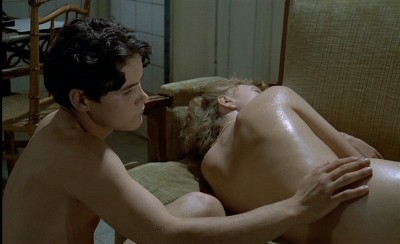
• Couldn’t really find much for this film.