A few weeks ago I received a request to review a short film that acts as a teaser for a feature film called Sex, Love & Z‑Parts. I received the screener last week, along with comprehensive supplemental materials and have also traded a few emails with Marcus D. Russell, the driving force behind the production. So here’s the review:
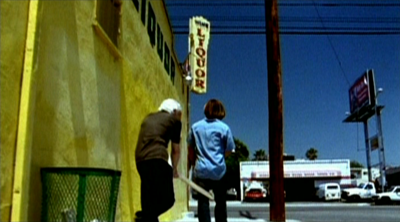
Sex, Love & Z‑Parts immediately recalls Soderbergh’s Sex, Lies and Videotape, but since I’ve not seen that film, I can’t speak to any other parallels. This is likely for the best, since I know of few things that independent filmmakers hate more than being accused of derivative style. The first thing you notice about this film is the quality of the production values. The filmmakers are only amateur in the sense that no studio is paying them to do the work. It is obvious that each aspect of the production was chosen carefully, from the film stock to the pacing of the action. This care has enabled the filmmakers to provide a space in which the story can be told through multiple subjectivities.
The style and content is informed by a careful rendering and exposition of Generation X traits, enumerated in the thesis that was part of the supplementary materials:
The films of Generation X have the following characteristics:
1) Conspicuous absence of parental figures…
2) Longing for the iconographic male bravado commonplace in the cinema that preceded it…
3) The ever-present sense of failure…
4) The issue of manhood. How would a man act?…
5) An inability to mold into the American framework…
6) The relationship problem…
This manifesto was informed by Dogme 95, but Big Hit’s ideas focus on more existential themes than cinematic requirements. It is possible to see glimpses of this in the shortened feature I was sent, and while it will take the full film to flesh out and prove whether or not Marcus and his crew have been accurate as well as precise in their targeting, they are certainly doing more with this film than most other independents.
From an email:
Scott and I didn’t think we could really get out point across without extremely high production values. They are so used to grainy digital images that they fall in love with the prettiness.…that gives us an edge and a level of trust that is tough to create in indie film. We really try to emulate some of the popular looks/setups of film and TV..and then invert the meaning.
This is an interesting film because you are really not supposed to do this kind of shit on the short film circuit. The expectation is that you are an amateur…so you can imagine that they aren’t exactly happy that two loud mouth guys from LA…are puttin’ it down in the frame.

Personally, coming from someone born at the ass-end of the Gen X curve, they seem to have the baggage behind the label under their thumbs. The prolonged adolescent estrangement from the baby boomer worldview and simultaneous implanted desire to live up to it, the struggle for agency, authenticity and loyalty in spite of it all resound strongly in SLZP. The mission of Gen X, to me, seems to be the process of defining what it means to be an adult in a life that has had a distinct lack of them. Thanks in part to their choice of film stock [“Eastman Kodak 7278 (500 Tungsten balance) for the interiors and the night shoots… Eastman Kodak 7274 (200 Tungsten balance) for the ext/day stuff”] the film almost feels like it was shot in the early 80s, seems to say “this is how we would have done things [including make movies] if we were adults when we were children. They might not be the best choices, but we’ll roll with it and accept the world for what it is.” And if that isn’t Gen X, I don’t know what is.
I shuttled the screener off to Tremont Independent, maybe it’ll show at their December screening.