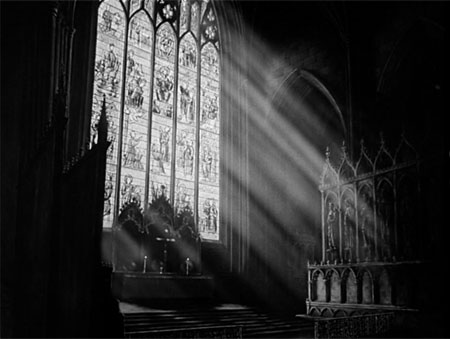
A part of this viewing list: Criterion Collection Spine #32: David Lean’s Oliver Twist.
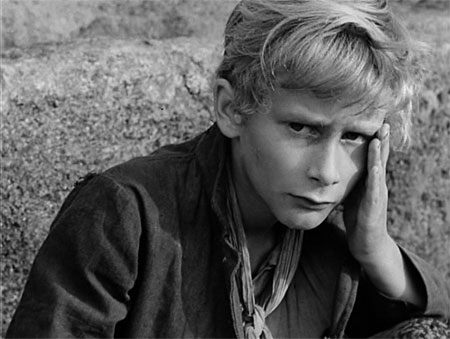
Two years after David Lean’s Great Expectations, Alec Guinness is back in another Dickens adaptation. This time he’s very aged through makeup and a giant prosthetic nose [that got the film denounced as anti-Semitic], but his portrayal of Fagin really shows off his particular acting chops. His struck posed eccentricity steals the show in every scene he’s in, although sometimes the beautiful Nancy gives him a run for his money. I’m only familiar with the Oliver Twist tale in terms of modern cultural references, like Chef Boyardee commercials. Yet it seems as if the same [albeit small] issues that were found in Great Expectations are here as well. Namely, the inconsistent use of intertitles as narrative cues, and obvious plot excisions to remain true to the core story. Where this film astounds is in the cinematography. Much more varied than Great Expectations, dutch angles, subjective camera-work and amazing approximations of natural light make the film beautiful to watch even when the action gets a bit boring and predictable.
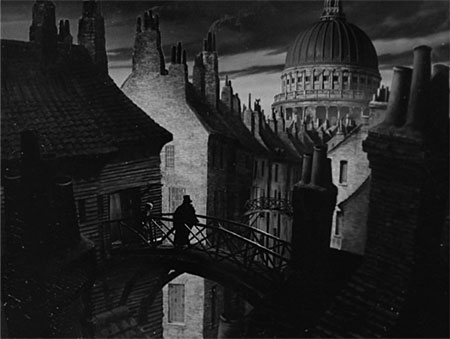
The artistry that I claimed hard to find in most of Lean’s work is always evident here. From the German Expressionist reminiscent London exteriors, to metaphorical shots that reflect pain or violence, like the opening scene’s shot of thorned branches cut to a woman in labor pains, to a later scene where a woman’s murder happens offscreen while a dog scrabbles and yelps to run out of the room. Where Great Expectations was psychologically charged, Oliver Twist is more concerned with physical abuse. Although the film is quite violent, however, it never really seems as though Oliver has it that badly off. Especially since we know how tired the trope of down-on-his-luck makes good is. This isn’t the fault of the movie, but a necessary expectation derived from the legacy of Dickens’s influence on English literature and story-telling as a whole.
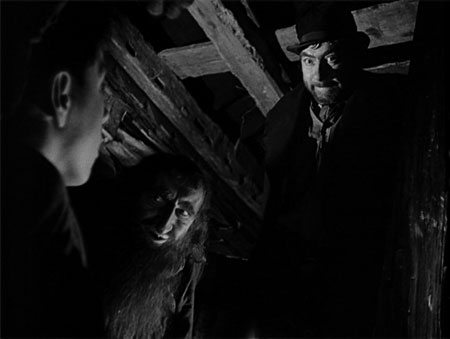
The controversy engendered by this film was mostly concerned with the anti-Semitism implicit in Fagin’s character. There really isn’t any way to soften it more than Alec Guinness’s portrayal managed. Fagin isn’t so much a bad character as one to be pitied; his obvious care for his pickpocket charges is just twisted by avarice. The fact that he is Jewish is incidental to this, but unfortunate since it does play to certain stereotypes. Coming as quickly as it did on the heels of World War II [distributed in 1948], the timing for the release of the film could certainly have been a bit more tactful. Nevertheless, the classic-status of Oliver Twist as a novel and its trickle-down to this film in particular will leave these thorny problems to crop up each time someone decides to make a great adaptation of the work.