A part of this viewing list: Criterion Collection Spine #37: Terry Gilliam’s Time Bandits.

Woops. This movie totally didn’t do a damn thing for me. And usually I really like Terry Gilliam. I would have preferred something like The Adventures of Baron Munchausen as the Criterion pick, if they were going to go with a Gilliam kid’s movie, since that film is both entertaining, wonderful and well made. Time Bandits doesn’t seem like any of those to me, but I’m hoping that it was necessary practice for Gilliam in order for him to produce Munchausen. It is a pretty good children’s film, although the characteristic Gilliam darkness might focus the demographic on older children. A younger one might not understand the whimsical Napoleon, the technocratic declamations of Evil or cope with the explosive ending of the parents. The film certainly doesn’t strike me as something funny. Silly, definitely, children will laugh at the dancing dwarves, but actual humor is rarely to be found. It is Monty Python without the punch.
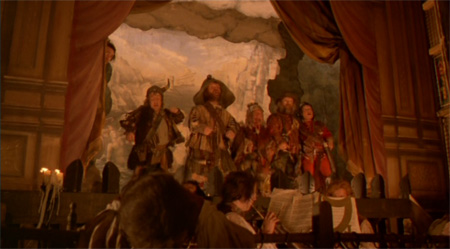
The filmmaking is Gilliam™; a sort of steampunkesque magical realism, where things like knights breaking through wardrobes in 20th century Britain seem plausible mainly because the sets are as banal as real life and the future already appears obsolete. What I mean is that a viewer doesn’t have to suspend disbelief to see and enter into a room that looks like what any boy’s room looked like in 1981, and when the magic occurs, it is the type of magic that a boy would imagine happening in his room. Gilliam never dives too deeply into the rich territory he presents. Instead the constant flitting about allows him to keep the film at a level that children can understand and that also appears to be a bit dreamlike; setting up the “it was only a dream, or was it?” cliché ending.
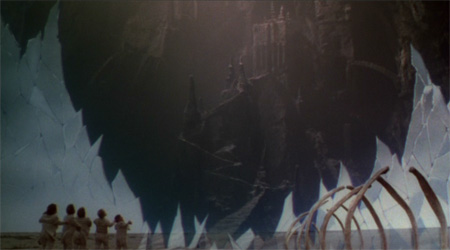
It often seem like Gilliam keeps making movies in attempts to either elucidate a complicated thought or pin down a specific worldview that is his Truth. He’s ambitious, in the respect that his goal appears to be a unified theory, whereas other directors are content with the explication of a small piece of truth. Gilliam is a philosopher who accidentally became a filmmaker and uses that medium as his thesis vehicle. He certainly seems to express a Camusian existentialist absurdity, focused less on the absurdity of existence period, and instead on the absurdity of existence now. And while this idea that humans waste their lives convincing and dreaming about better things provides frustration, the fact that these fantasy escapes are often better than actual life, and the fact that Gilliam is a creator and purveyor of such fancifuls is an irony that I am certain Gilliam is aware of.
- Criterion Essay by Bruce Eder
- Criterion Contraption Review
- Screenonline Review [subscription required for clips and other goodies]
- Terry Gilliam at Senses of Cinema
- Fanzineish review at Sweatpants Erection
- YouTube Trailer